Operation Magic Carpet: in remembrance of the Yemenite Jews

(Published on Im Irtzu)

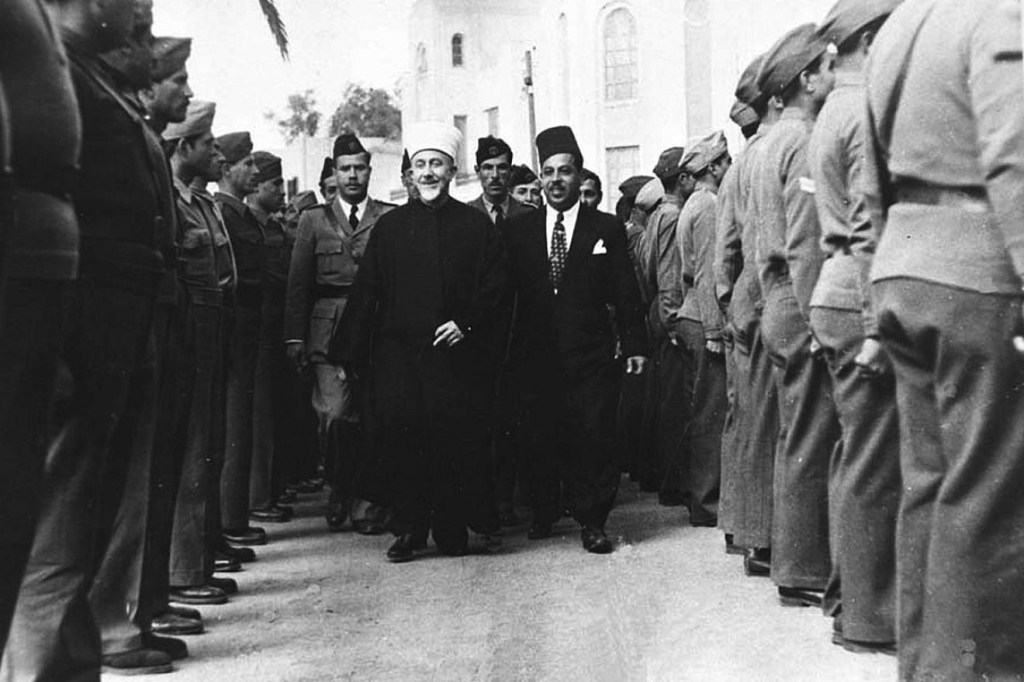
The Grand Mufti’s Nazi connection

Full article: https://www.jpost.com/opinion/op-ed-contributors/the-grand-muftis-nazi-connection-347823

Muslim antisemitism and the real apartheid 

Read full article by Lyn Julius on Jewish News Syndicate.

Oren Kessler: 1936 Palestine’s missed peace deal

Read the whole interview with Oren Kessler here.

Ephraim Karsh: Palestine Betrayed

“It was only from the early 1950s onward, as the Palestinians and their Western supporters gradually rewrote their national narrative, that Israel, rather than the Arab states, became the Nakba’s main, if not sole, culprit.

The ex-Mufti led the way by casting his countrymen as the hapless victims of a Jewish grand design to dispossess them of their patrimony, as a steppingstone to regional domination, and this fantastic claim was quickly picked up by many of his contemporaries. Some ascribed these supposed designs to “The Protocols of the Elders of Zion”, a virulent anti- Semitic tract fabricated by the Russian secret police at the turn of the twentieth century, from which the Jewish leadership allegedly drew inspiration and operational guidelines; others attributed them to religious and historical sentiments.

All viewed Zionism as omnipotent, with tentacles that reached the world’s most powerful spots. In the words of the prominent Islamist leader in mandatory Palestine, Muhammad Nimr Khatib:

“We are fighting an organized, educated, cunning, devious, and evil people that has concentrated the world’s wealth and power in its hands…. We are fighting the forces that have prevailed over the entire world, we are fighting the power that buried Hitler and defeated Japan, we are fighting World Zionism that has Truman in its pay, enslaves Churchill and Attlee, and colonizes London, New York, and Washington.”

Stefan Frank: Hotel Stalingrad – Israels Rettung 1948

Nazis in Palästina

Am 29. Mai 1946 war Hitlers Verbündeter, der ehemalige Großmufti von Jerusalem, Amin el-Husseini, gerade aus der französischen Kriegsgefangenschaft geflohen und per Flugzeug und einem falschen Pass in Ägypten gelandet. Seit 1920 hatte er in Palästina Pogrome organisiert und mit Adolf Hitler am 28. November 1941 den geplanten Holocaust im Nahen Osten besprochen. Husseini war auch die treibende Kraft hinter dem pro-nazistischen Putsch im Irak gewesen, der im Juni 1941 zu dem Farhud genannten Massaker an Hunderten von irakischen Juden führte.

Nun wandte er sich wieder seinem Lebenstraum eines judenreinen Palästinas zu. Im Dezember 1947 wurden dort zwei große Freiwilligenarmeen gegründet, die Krieg gegen die Juden führten: Die Arabische Errettungsarmee, deren Emblem ein Krummdolch war, der einen Davidstern durchsticht, wurde von der Arabischen Liga aufgestellt und unterstand dem Kommando von Fausi al-Kawukdschi, der während des Arabischen Volksaufstands von 1936 bis 1939 ein gefürchteter Guerillaführer war. 1941 war er im Irak am Farhud beteiligt gewesen. Die Nationalsozialisten flogen den vor den Briten fliehenden al-Kawukdschi nach Deutschland aus, wo er in Berlin mit einer Wohnung in der Cuxhavener Straße, einem Dienstwagen samt Chauffeur und dem Rang eines Wehrmacht-Oberst ausgestattet wurde. Fausi al-Kawukdschi war ein wichtiger Faktor für die deutsche Propaganda in der arabischen Welt.

Der Spiegel schrieb im Dezember 1947 und dem Titel »Mit deutschem Gruß für Palästina«, al-Kawukdschi sei der »prädestinierte Oberbefehlshaber einer Freiwilligenarmee für Palästina«. In Palästina habe er eine Sitte der Nationalsozialisten übernommen, die ihm »damals so gut gefiel: Unter der grünen Fahne des Propheten werden seine Freiwilligen mit dem ›deutschen Gruß‹ vereidigt.« 

Die andere Miliz war Amin al-Husseinis Dschihad-Armee, die von seinem Cousin Kadir al-Husseini befehligt wurde. Mehr noch als al-Kawukdschi galt Kadir al-Husseini als exzellenter Stratege und hatte fanatische Bewunderer. Beginnend im Dezember 1947 hatte er einen Belagerungsring um das jüdische Jerusalem gelegt, um die Juden auszuhungern und Palästina ethnisch zu säubern.

Eine Serie in elf Teilen veröffentlicht auf MENA-WATCH:

Teil 1: Exodus

Teil 2: Bab el-Wad

Teil 3: Kyrus

Teil 4: Ad Halom

Teil 5: Liebesgrüße aus Moskau

Teil 6: Jan Masaryk

Teil 7: Operation Balak

Teil 8: Gold Meyerson in Amerika

Teil 9: Jaffa Oranges

Teil 10: Die Geschichte von Frank Greenspun, I

Teil 11: Die Geschichte von Frank Greenspun, II

Teil 12: Die Geschichte von Frank Greenspun, III

Teil 13: Die Geschichte von Frank Greenspun, IV

Teil 14: Die Geschichte von Frank Greenspun, V

Teil 15: Die Geschichte von Frank Greenspun, VI

Teil 16: Die Geschichte von Frank Greenspun, VII

Teil 17: Die Geschichte von Frank Greenspun, VIII

Teil 18: Die Geschichte von Frank Greenspun, letzter Teil

Teil 19: Land and Labour

Teil 20: Fliegende Festungen

Teil 21: Ein Schauprozess in Prag

Teil 22: Verschwörung gegen Amerika?

Teil 23: “Was hätten sie ohne uns getan?”
Paul Schneider: Nazism and the Palestinians

Husseini then became the leading purveyor of Nazi propaganda to the Arab world. As historian Jeffrey Herf documented in his book Nazi Propaganda for the Arab World, this included millions of leaflets and thousands of hours of radio broadcasts. The central theme of these efforts is captured in Husseini’s repeated exhortations to “kill the Jews wherever you find them.”

At the same time, Husseini aggressively silenced moderate Arabs, often by having them assassinated. (His successor, Yasser Arafat, would adopt the same practice.) In this way, he ensured that there could be no compromise with the Zionists.

The Nazis also financed, armed and collaborated with the violently antisemitic Muslim Brotherhood, which continued to admire the Nazis after World War II. In 1946, the Brotherhood’s founder Hassan al-Banna lauded Husseini as a “hero who challenged an empire and fought Zionism with the help of Hitler and Germany. Germany and Hitler are gone, but Amin al-Husseini will continue the struggle.”

Husseini did just that, his reputation burnished by his Nazi collaboration. According to historian Bernard Lewis, pro-German sentiment was so strong in the Arab world “that even after the final defeat of the Third Reich it did not fade away and—what is perhaps more significant—it was not concealed. On the contrary, a pro-Nazi past was a source of pride, not shame.”

Read the whole article on JNS by clicking here

Nazis, Islamic Antisemitism and the Middle East: The 1948 Arab War against Israel and the Aftershocks of World War II

“Fifthly, my book shows that Arab attitudes toward Zionism were less monolithic than has often been assumed. Thus, already in 1937, there were many Arabs who supported the two-state solution for Palestine. Admittedly, the Arab League unanimously opposed the two-state solution for Palestine advocated by the United Nations in November 1947. Even so, how to react to this decision was disputed until the last minute: on several occasions the Arab League ruled out the possibility of an attack by regular Arab forces on the Jewish state. Egypt, for example, questioned this war, which began on May 15, 1948, only a few days before it began: ‘We shall never even contemplate entering an official war’, declared General Muhammad Haidar, Egypt’s Defence Minister, at the beginning of May 1948. ‘We are not mad’.

Why did an ‘official war’ against Israel nevertheless take place? My book provides evidence that it was primarily pressure from the ‘Arab street’ and the antisemitic campaigns of the Muslim Brotherhood that led the Arab rulers to overcome all their doubts and attack Israel. In 1948 the Muslim Brotherhood was the largest antisemitic movement in the world, with one million members. It was determined to continue the war to prevent a Jewish state started by Hitler and the Mufti. Its campaign could draw on the lingering echoes of the antisemitic Nazi propaganda in which preventing the emergence of a Jewish state and wiping out the Jews living in Palestine had been constant themes.

This war was not inevitable. It took place despite many countervailing considerations because the Nazis’ antisemitic Arabic-language propaganda had shaped the postwar political climate. In this feverish atmosphere, no Arab leader felt able to successfully resist the Brotherhood’s warmongering. There are, therefore, good grounds for interpreting the Arab war against Israel as a kind of aftershock of the previous Nazi war against the Jews. Amin el-Husseini embodied the continuity of the two events. His religiously packaged antisemitism, which had cost thousands of Jews their lives in 1944, was four years later directed against Israel.”

This is an excerpt from the new and upcoming book by Matthias Küntzel which will be published in August 2023 by Routledge Press. You can find the announcement on their website here: https://www.routledge.com/Nazis-Islamic-Antisemitism-and-the-Middle-East-The-1948-Arab-War-against/Kuntzel/p/book/9781032437767 as well as an introductory discussion on the Fathom Journal’s website: https://fathomjournal.org/the-1948-arab-war-against-israel-an-aftershock-of-world-war-ii/